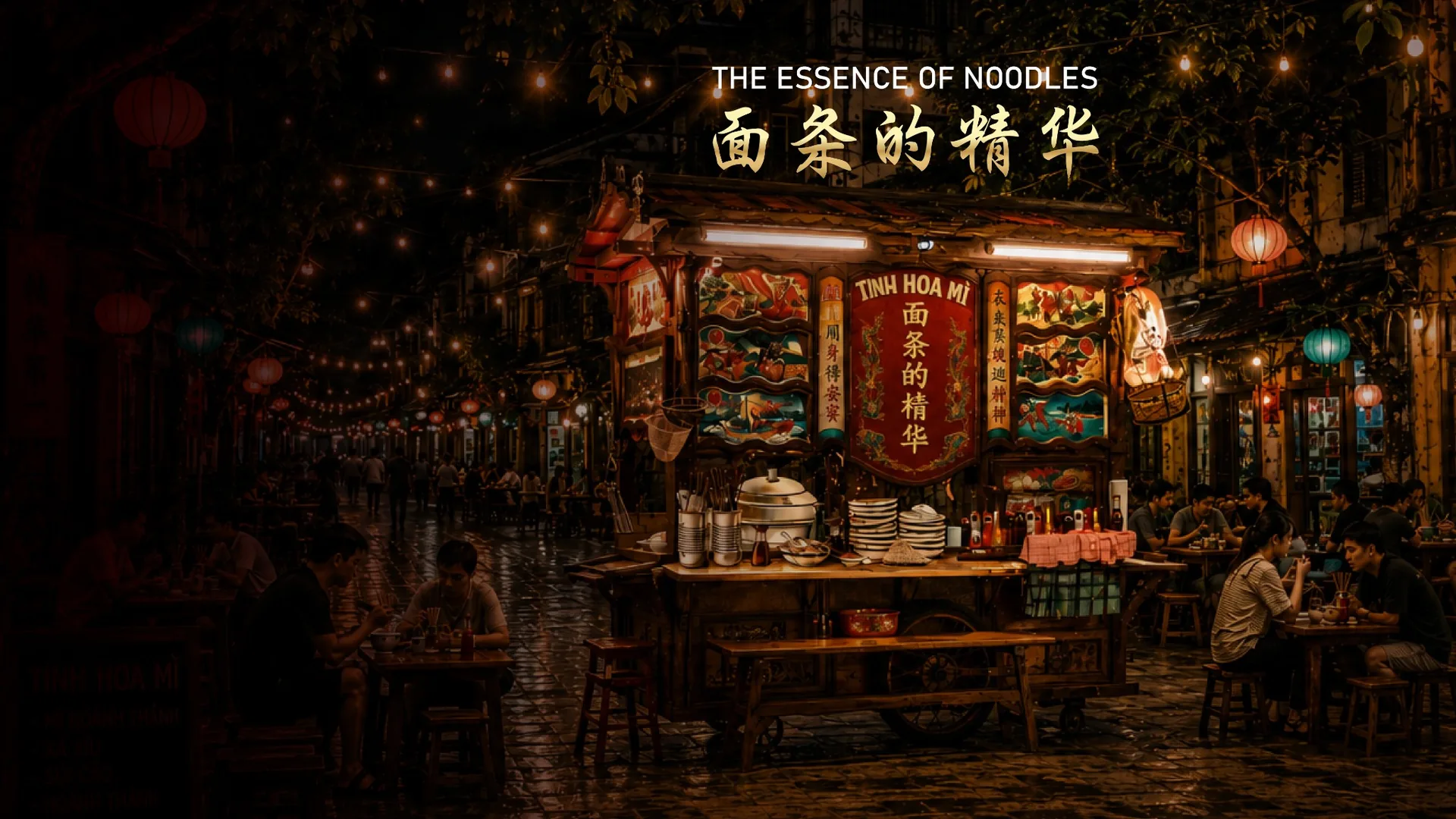
Long ago, noodles were made by hand.
The dough was kneaded, rolled, then pulled into strands, one after another. The same motions were repeated over and over again, and they could never be rushed. A noodle maker had to know when the dough felt just right, when it was ready to be pulled, and when it needed time to rest.
It sounds simple. But learning to make a truly good noodle can take years.
A master taught his apprentice.
A father passed the craft on to his son.
Some things were never written down as recipes. You simply stood beside someone and watched. If you made a mistake, you corrected it. If it was not quite right, you tried again. Slowly, over time, the hands themselves learned what to do.
Perhaps that is why people used to say that food carries something of the heart of the person who makes it.
A bowl of noodles may not look elaborate when it arrives at the table. Golden noodles, a little meat, some greens, and a ladle of hot broth. Yet behind that simplicity lies so much work that the person enjoying the bowl may never see.
For a handful of white flour to become noodles that are tender yet pleasantly springy, carrying the delicate fragrance of freshly made dough, is a journey shaped entirely by the hands that make them.
TINH HOA MÌ cherishes things like these.
Not because everything old is necessarily better than the new. But because in a world that moves faster every day, some things are still worth slowing down for.
Let the broth simmer until it is just right.
Prepare every serving of noodles with care.
Place a steaming bowl before each guest with the sincerity and respect of someone who takes pride in their craft.
Because in the end, people may not remember how many ingredients were in a bowl of noodles.
But they will remember how it made them feel.
A little deliciousness.
A little familiarity.
A little warmth.
And sometimes, from something as simple as a single strand of noodle…
we find ourselves remembering something we have loved for a very long time.
A Story of Noodles
For a handful of white flour to become noodles that are tender yet pleasantly springy, carrying the delicate fragrance of freshly made dough, is a journey shaped entirely by the hands that make them.